Suggested citation for linking to this discussion:
U.S. Department of Agriculture, Economic Research Service. (2024, December 3). Farm household well-being: Farm household income estimates.
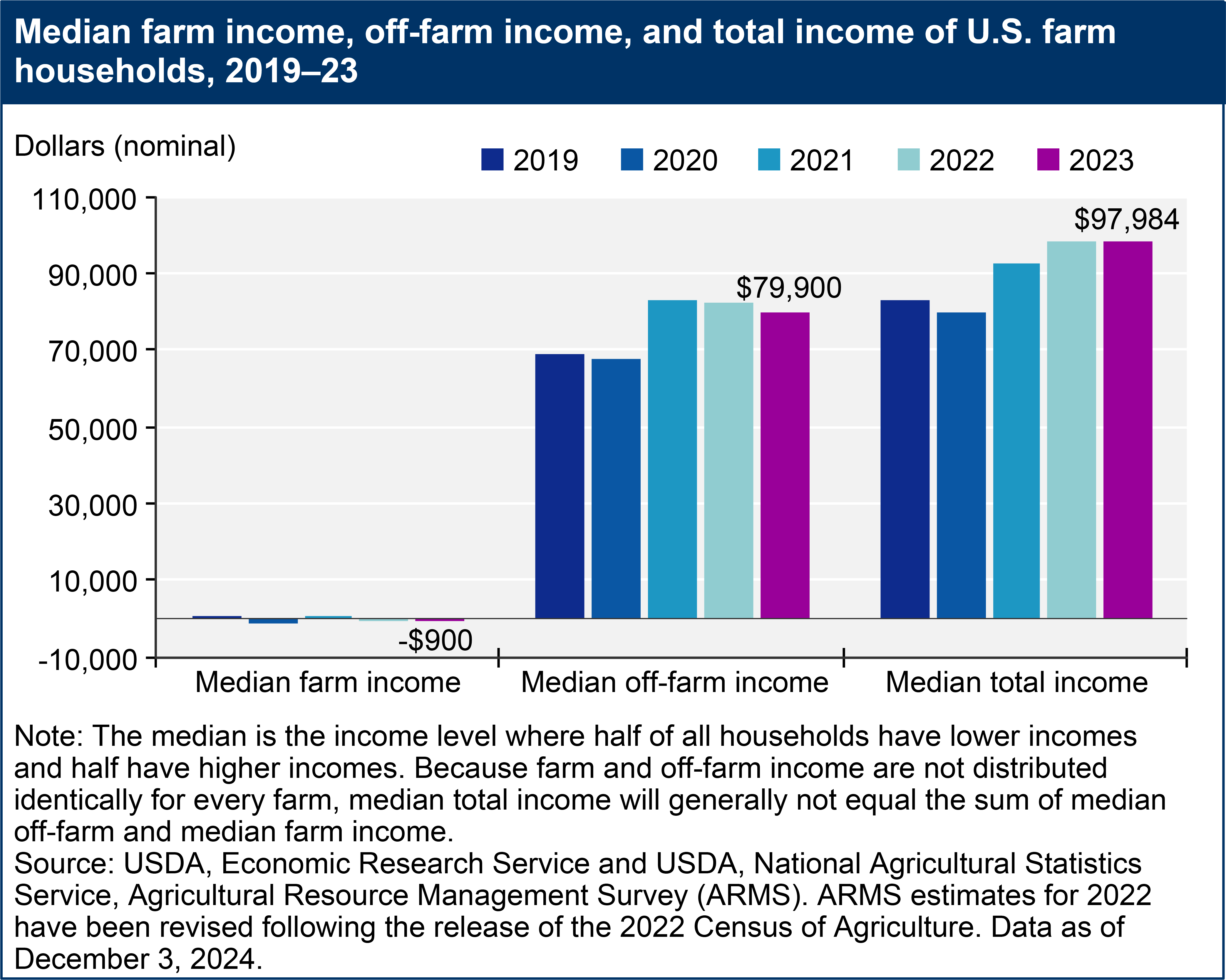
Estimated median total income for farm households decreased in 2023 relative to 2022, and median farm income and median off-farm income also decreased. At the median, household income from farming was -$900 in 2023. Given the broad USDA definition of a farm (see glossary), many small farms are not profitable even in the best farm income years. Median off-farm income in 2023 was $79,900, while the median total household income was $97,984.
The median is the income level where half of all households have lower incomes and half have higher incomes. Because farm and off-farm income are not distributed identically for every farm, median total income will generally not equal the sum of median off-farm and median farm income.
Download chart image | Chart data
See the Farm Household Income and Characteristics data product table for statistics on principal farm operator household finances for recent years.
2023 Household Income Varies by Farm Type
The USDA, Economic Research Service (ERS) developed a farm typology that considers annual gross cash farm income combined with the occupational characteristics of principal farm operators to classify farms into more homogeneous groups.
In the USDA, ERS typology, family farms with less than $350,000 in annual gross cash farm income are classified as small farms and are further subdivided based on the self-reported primary occupation of the farm’s principal operator. If the operator reports being retired or having a primary occupation other than farming, the small farm is classified as a residence farm. If they report farming as their primary occupation and they are not retired from farming, the small farm is classified as intermediate. Commercial farms are farms with $350,000 or more in gross cash farm income, regardless of the principal operator’s primary occupation. In contrast to residence and intermediate farms, commercial farm households derive most of their income from farming activities (see the Farm Household Income and Characteristics data product table on principal farm operator household finances, by farm typology, 2023).
The number of U.S. family farms has declined slowly over the past decade. The roughly 1.8 million U.S. family farms vary significantly in size, level of farm and off-farm income, and total income (see the Farm Household Income and Characteristics data product table on all farms and family farms, by farm size class (gross sales), 1996–2023).
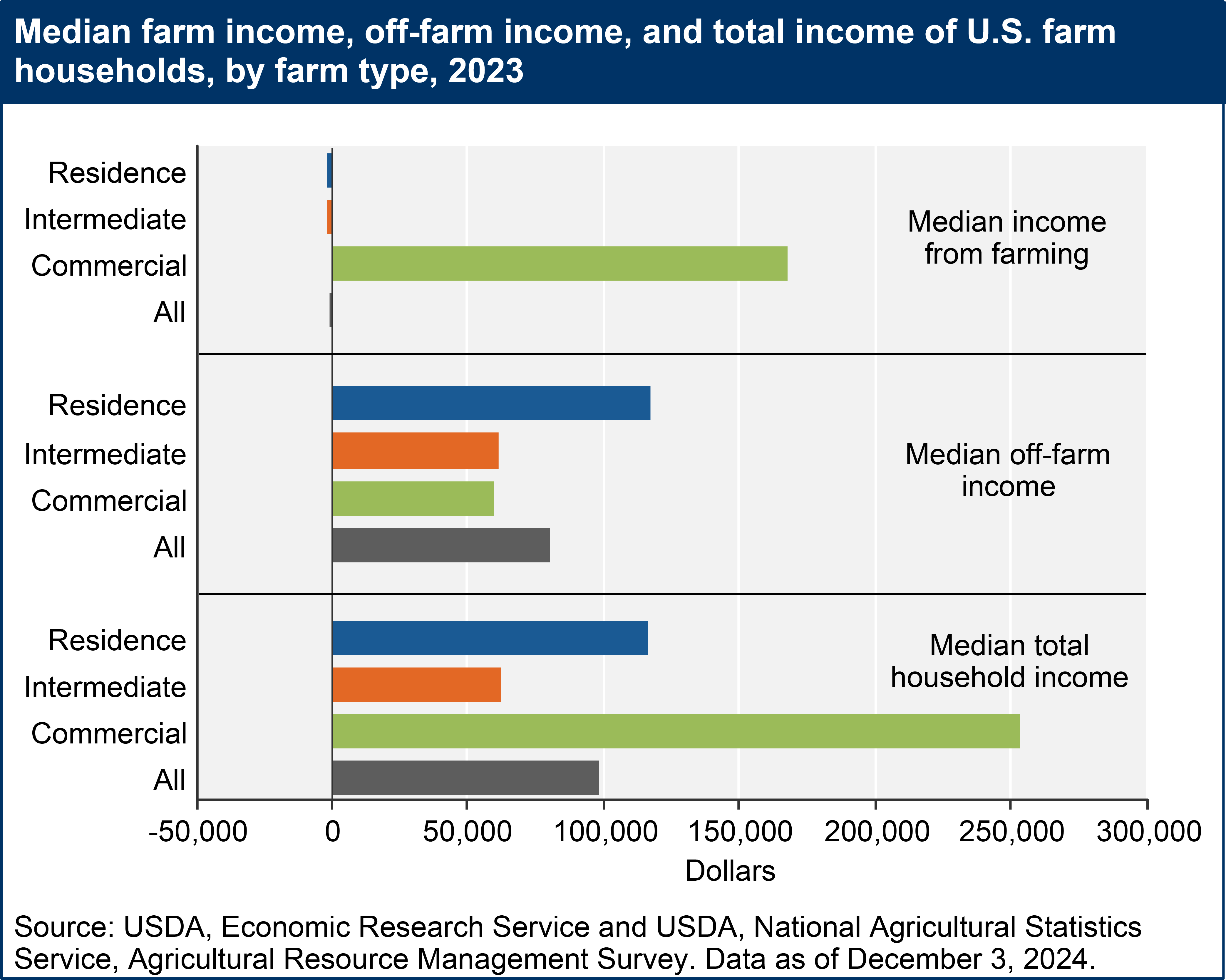
In 2023, the median income from farming was $167,550 for households operating commercial family farms, and their median total household income was $253,496. Households associated with intermediate farms reported median farm income of -$1,974 and a median total household income of $62,014. Residence farms reported median income from farming of -$1,980; however, the substantial off-farm income of residence farm households provided them with higher total median income ($116,493) than intermediate farm households in 2023.
Download chart image | Chart data
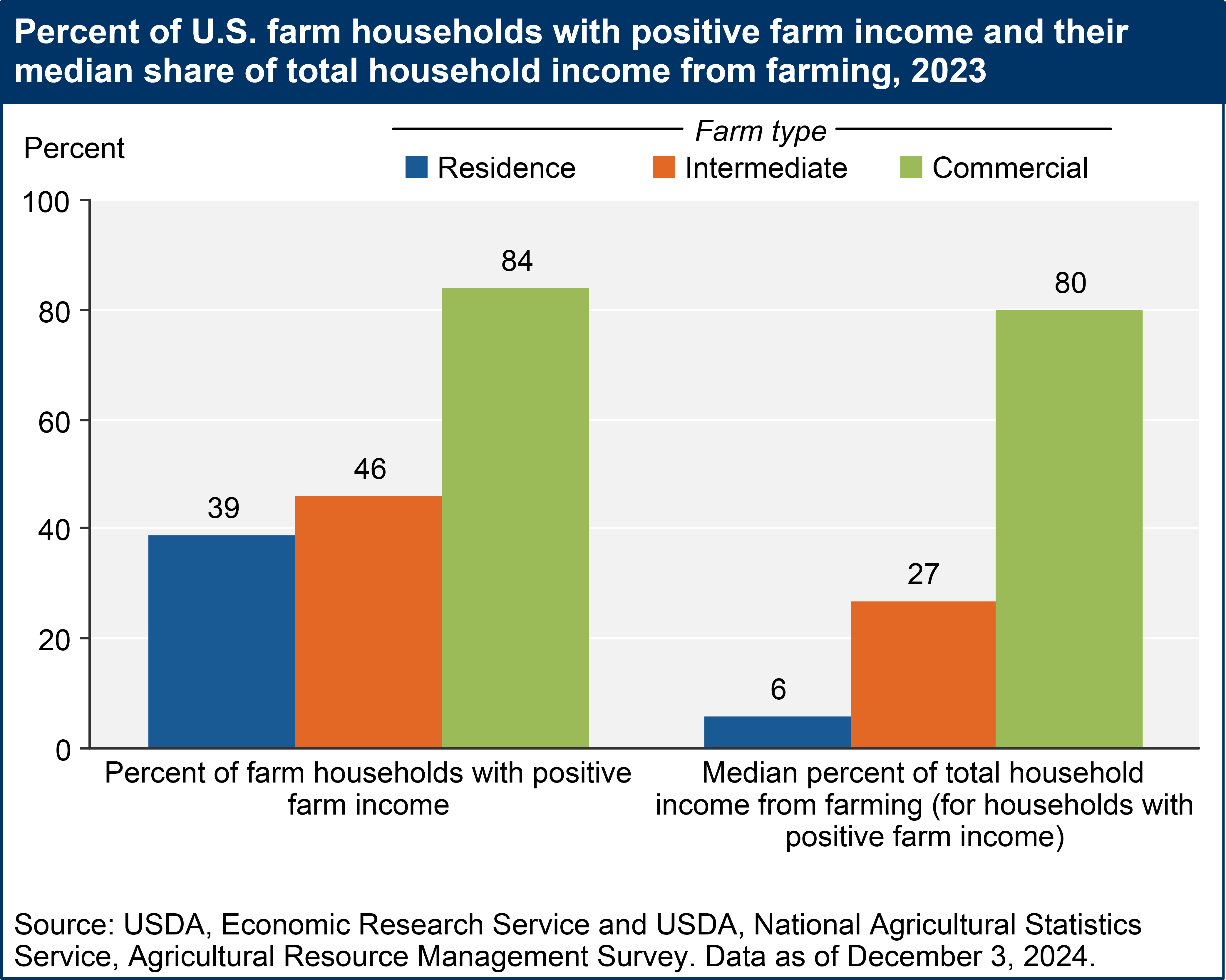
The role of farm income in farm household finances can be further understood by looking at two complementary statistics: the share of households with positive income from farming and, among them, the median percent of total household income derived from farming. Farm income is a small share of total annual income of most farm households operating residence farms, is a secondary source of income for most households operating intermediate farms and is typically a primary source of income for those operating commercial farms. In 2023, 39 percent of residence farms had positive income from farming. Among those with positive income from farming, that income contributed 6 percent to their total household income at the median. For intermediate farms, 46 percent had positive farm income, which at the median represented 27 percent of their total household income. In 2023, 84 percent of commercial farms had positive farm income and for those households, farm income accounted for 80 percent of their total household income at the median.
Download chart image | Chart data
Commodity Specialization
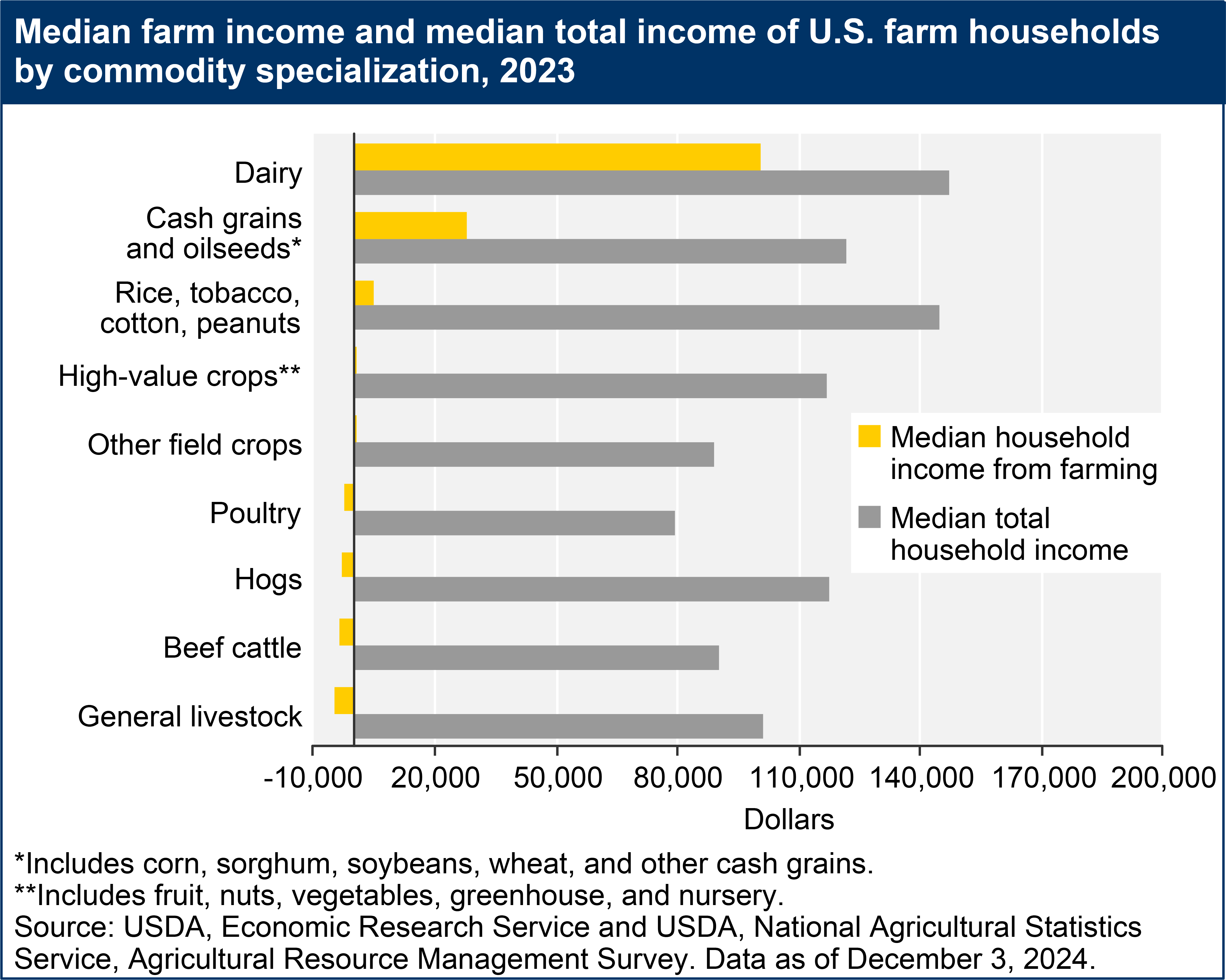
A farm's specialization is determined by the one commodity or group of commodities that makes up at least 50 percent of the farm's total value of agricultural production (see glossary). In any given year, production and market conditions will vary for farms that specialize in different commodities. Household income variation may also stem from differences in scale of operation and how much income the operator and other household members earn off the farm. For example, with its extensive and ongoing time demands, managing a dairy farm rarely permits an operator to work many hours off-farm.
Download chart image | Chart data
Income by Farm Resource Region
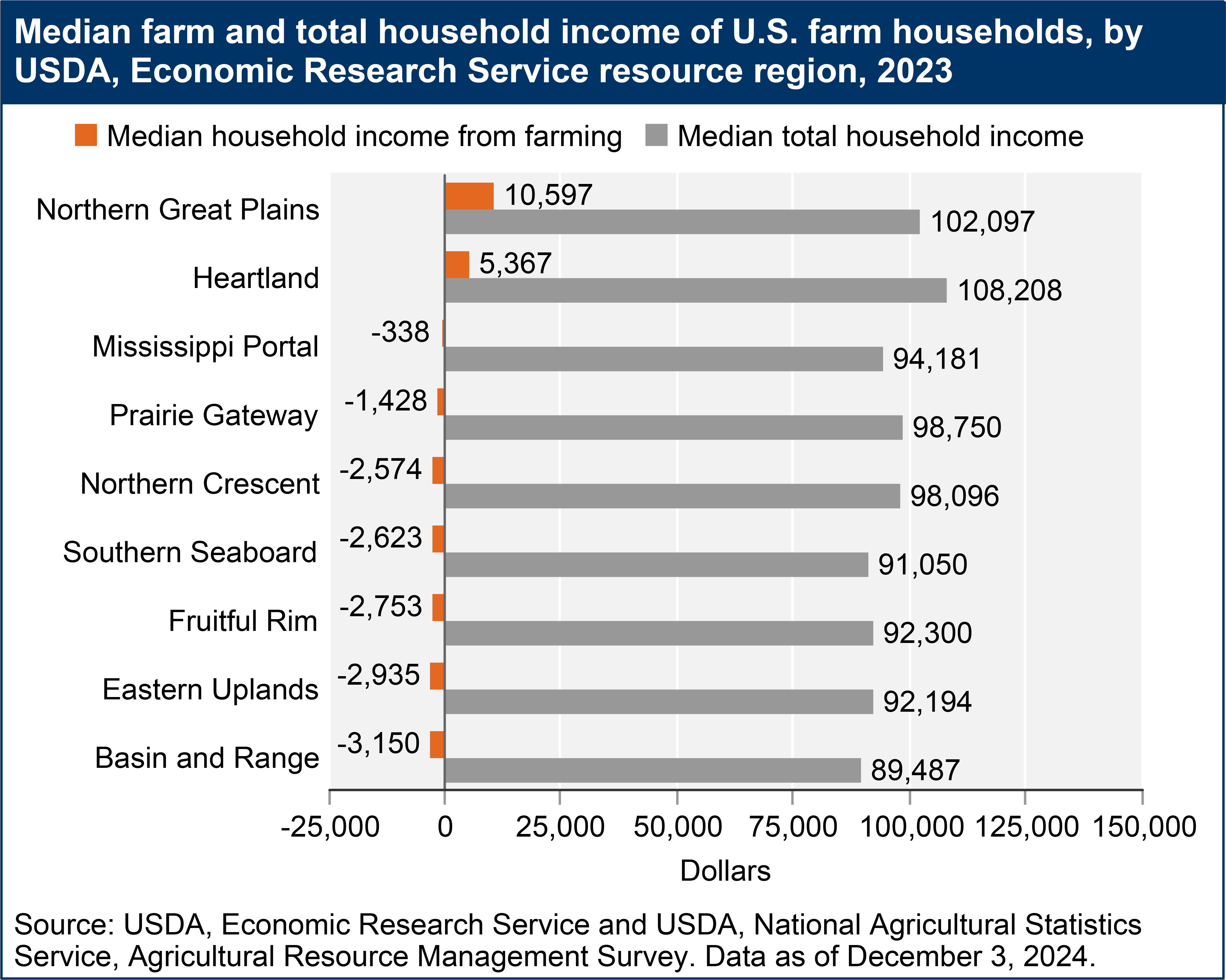
Farm household incomes vary by location, largely reflecting regional differences in farm typology and commodity specialization. USDA, ERS groups farms into nine resource regions based on soil, climate, and agronomic needs. These conditions cut across State boundaries. For details on the farm resource regions, see the ERS brochure, Farm Resource Regions (AIB-760, August 2000).
In recent years, only the Northern Great Plains and Heartland Farm Resource Regions have had a consistently positive median farm income for farm households ($10,597 and $5,367, respectively, in 2023). Farm households in these regions also have the highest total household income. The Heartland has the largest number of farms and commercial farms, the highest value of production, and the most cropland. The region is mainly composed of cash grain and cattle farms. The Northern Great Plains leads production in wheat and barley.